

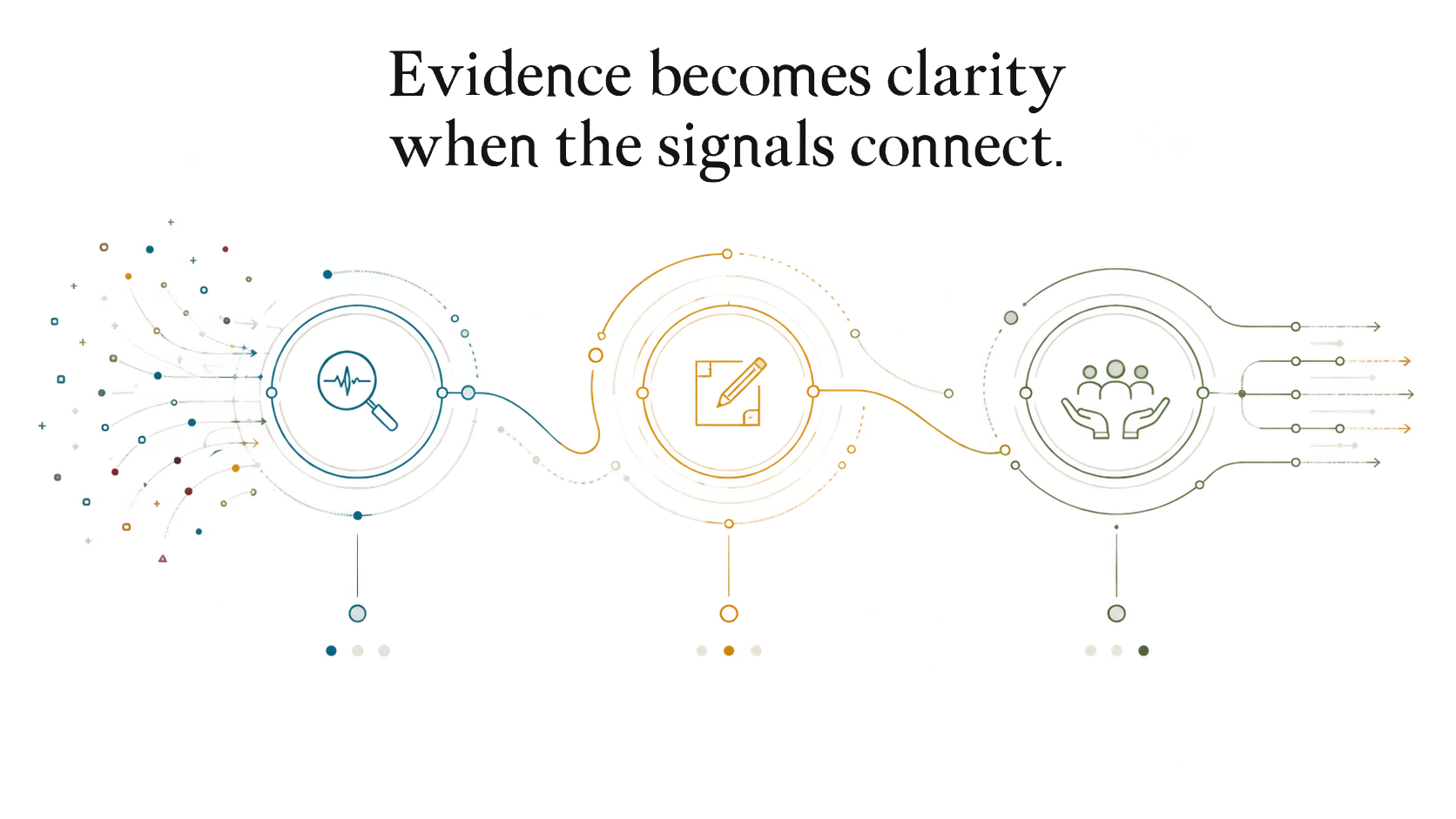
Separate what happened from what it might mean
Your interpretation shapes your experience and decisions. Evidence shows what the record supports. Keeping them distinct lets you test an explanation without treating it as a fact.
Build the factual record
Start with dates, messages, stated expectations, observable decisions, changes in responsibility, documented feedback, and other concrete information. Then name the assumptions or concerns that sit around those facts.
For example, “My manager canceled three scheduled check-ins” is an observation. “My manager wants me to fail” is an interpretation. Ask what the record shows, what context is missing, and what other explanations remain possible.
Use the gap to decide what to do next
A strong factual record should help you understand evidence, responsibility, risk, options, and the recommended path.
The purpose is to understand the system and your position inside it clearly enough to choose a responsible next step.